Handling small wrought iron pieces tongs advice

Joined
Jun 2, 2025
Messages
5
I was working with some wrought iron the other day and ended up with a few small pieces. They shaped nicely when heated, without any cracks. Now I've got a bunch of 3/4 cubes, but none of my tongs seem to grip them well.

Do you think it's worth making a smaller set of tongs just for these little pieces? Or is that too much hassle for such small sizes? I'm curious about how you all handle tiny stock like this.
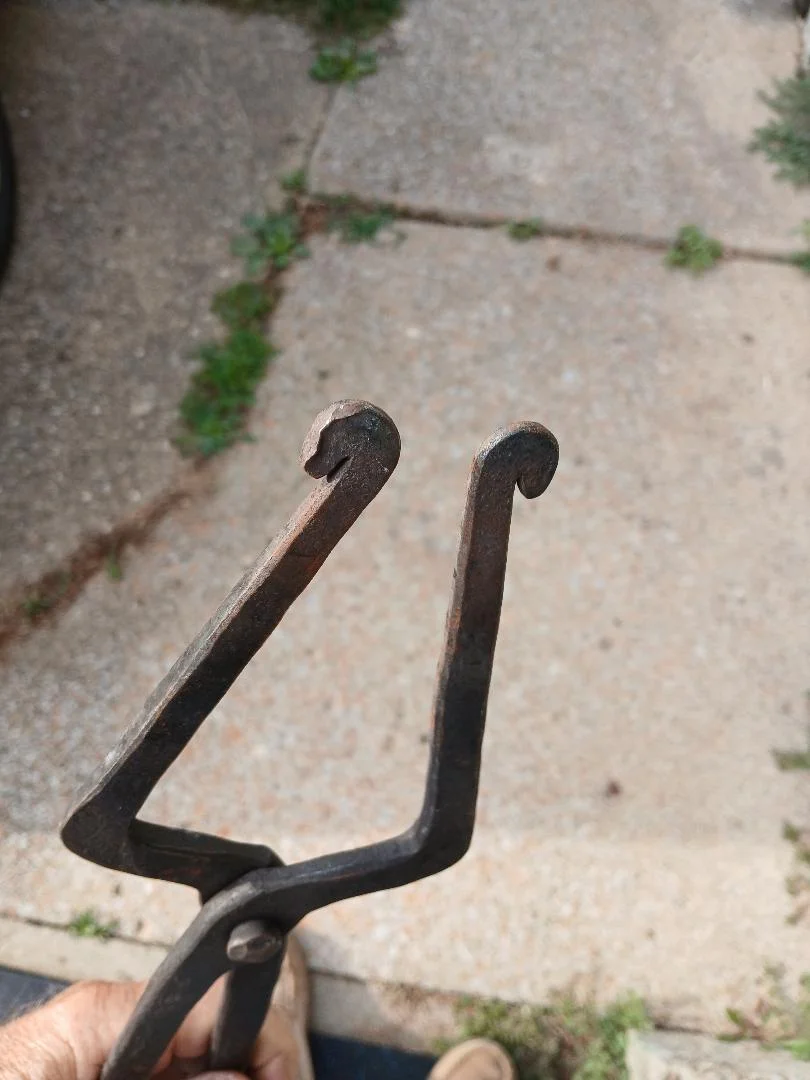
 
For those little cubes, I'd say it's definitely worth knocking up a dedicated pair of tongs.
Aim for a flat jaw or a small set of box jaw tongs.
The key is to make them scaled down significantly, so the jaws are proportionate to your 3/4" stock.
This will give you a much more secure grip and prevent any slipping.
It's far less hassle to make the right tool once than to fight with the wrong one every time.
 
If they are actual wrought, maybe you can forge weld them back together into a longer piece.
Or if they are square cubes, maybe make a pair of dice from them ?? I also have a small pair of thin jaw tongs for handling small stuff. I mostly use them as pick up tongs getting small things from the gas forge.
Ohio Rusty ><>
 
Even a simple pair made from flat stock or repurposed tools can make a big difference, it's not a big deal, and once you've got them, handling tiny pieces becomes way easier and safer.
 
I have a pair of tongs I had gotten a few years ago from Firey Furnace Forge at Quad State. They are quite flat on the ends. Hammer makers use these types of tongs. Being the ends are flat, they wouldn't be in the way of working with a small cube. Maybe you could work up a small pair of tongs in this shape ??
Ohio Rusty ><>
 

Attachments

  • flat tongs.webp
    flat tongs.webp
    66.2 KB
Last edited:
Absolutely, flat-end tongs like those are great for handling small cubes. It's definitely worth forging a pair with that design for improved control.
 
I was working with some wrought iron the other day and ended up with a few small pieces. They shaped nicely when heated, without any cracks. Now I've got a bunch of 3/4 cubes, but none of my tongs seem to grip them well.

Do you think it's worth making a smaller set of tongs just for these little pieces? Or is that too much hassle for such small sizes? I'm curious about how you all handle tiny stock like this.
I'm an old guy and with no intention to imply anything negative in my posts.. just many decades of making every mistake you can imagine.. so IMHO.. It is always worth making specific tools for special jobs (or temp modify existing tools to fit.. ie heat your tongs and smack them till they fit the piece (if they are forged tongs). If you take the opportunity to learn to make tongs (and make them often).. you'll be able to make a pair in less time than it takes to go into town and buy a pair.. (1-2 heats for jaw and hinge boss.. forge the jaws on each end of one piece.. thin the middle a bit to weld the reins to and cut halfway between them and they are always equal length when done. If you weld the reins to the jaws using reg hot rolled round stock you save a lot of forging time.. (if you make a few feet of your own chain to learn to weld easily and confidently).

Old guy advice: It does take a year of steady smithing to learn to manage a coal fire (if you dont believe it.. make a note and reevaluate your position and opinion in a year). Hit HOT metal not warm.. use enough hammer for the job.. heat the metal through not just the surface.. weld on a rising heat.. you do the "forging" in your head while you're cranking the blower, once the metal is heading to the anvil its too late to "think", just do what you decided to.. the first welding blow should hit the metal at the same instant that the metal touches the anvil (and dont get so excited that you squirt all the melted part all over the shop, stick it first.. then finish the weld and use the remaining heat to make it almost invisible.. scarf and flux correctly and the weld will be good, you cant rush the prep. Oh.. also 1# of hammer per 10# of anvil (if you've got a 100# anvil don't use more than a 10# hammer.. also, first thing in the morning in a cold shop in the winter, heat a nice piece of stock up to forging heat and lay it on the anvil face to take the chill off, have a cup of coffee and decide where you left off the evening before and what you need to do that morning... before you start to work on it.. safer for the hardened face and better for a first forging or welding heat if you're earning (ever break an axe bit on a frozen pine knot?)

Disclaimer.. Almost sorry for the ramble and its also almost everything I know..
 
Back
Top