PegasusWhisper

New member
Joined
Mar 24, 2025
Messages
2
Alright, steelheads, let's settle this once and for all. 1018 steel vs A36, who's the real champ? On one side, we've got 1018, the smooth-talking, cold-rolled contender with better machinability and a polished finish. On the other, A36, the hot-rolled heavyweight that's rough around the edges but easier on the wallet.
Here's the deal, 1018 flexes higher tensile and yield strength, making it the go-to for precision machining. Meanwhile, A36 is the workhorse for structural projects, bending like a yoga master when needed. But let's not forget, 1018's cold-rolled process adds cost, while A36 keeps it budget-friendly.
So, what's your pick? Are you team 1018 for its finesse, or team A36 for its brute utility? Let's hear your takes, facts, experiences, or just good old steel banter welcome.
 
even though the A36 is cheaper and more flexible i think i would definitely go with the 1018 steel because of the precision machining. it has better surface finish, higher strength and tighter tolerances. so, for me definitely the 1018 steel :)
 
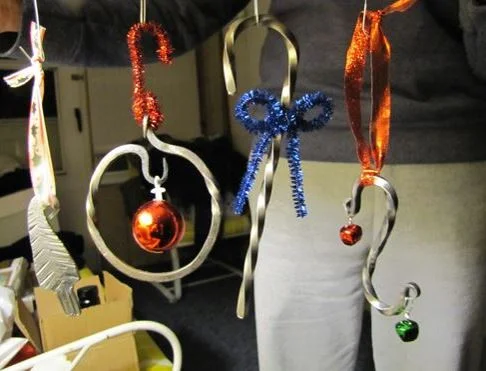
I use cold rolled 1018 for most everything. It saves me clean up time as it is already smooth and finished. It is my go to for christmas ornaments.
Ohio Rusty ><>

Christmas ornaments.webp
 
Alright, steelheads, let's settle this once and for all. 1018 steel vs A36, who's the real champ? On one side, we've got 1018, the smooth-talking, cold-rolled contender with better machinability and a polished finish. On the other, A36, the hot-rolled heavyweight that's rough around the edges but easier on the wallet.
Here's the deal, 1018 flexes higher tensile and yield strength, making it the go-to for precision machining. Meanwhile, A36 is the workhorse for structural projects, bending like a yoga master when needed. But let's not forget, 1018's cold-rolled process adds cost, while A36 keeps it budget-friendly.
So, what's your pick? Are you team 1018 for its finesse, or team A36 for its brute utility? Let's hear your takes, facts, experiences, or just good old steel banter welcome.
I'm part of team 1018 when it comes to precision projects,it offers better machinability, tighter tolerances, and a smoother finish. However, for structural applications where weldability and budget are key, A36 takes the lead. It really all comes down to what you're constructing
 
Yep, totally agree also. 1018's great for precision work, but A36 wins for structural jobs and weldability. All about the project
 
Sounds like 1018 is great for parts needing clean machining and a nice finish. Has anyone used both A36 for a frame and 1018 for detailed parts? I'm wondering how that went.
 
In my first metal shop project, we used A36 for the frame and 1018 for the moving parts, learned real quick why surface finish and precision matter. Ever since, I've kept them in their lanes. Both solid, just different beasts
 
1018 is stronger than A36 in it's (from mill state) but once heated for forging it becomes basically annealed and A36 is the stronger in both tensile and yield strength.
 
Against what most are saying, I'm on team A36. I'm not doing anything that should be polished and refined, so I'm sticking with the more forgiving one, for me at least, when it comes to bending. To be fair, I haven't done anything with 1018, so I might change my approach.
 
I like using A36 for forging, it's easy to work with and good for everyday projects. But 1018 looks nicer and works better when you need things to be exact. Has anyone seen a big difference in how they rust or harden when heated?
 
Back
Top